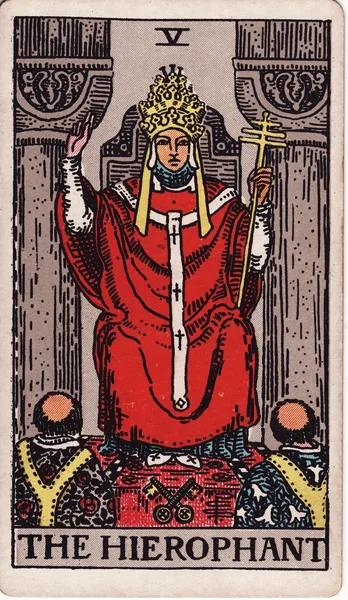
The Hierophant
The Hierophant is the teacher and keeper of shared tradition, offering guidance through established forms. The card values learning, belonging and accepted wisdom.
- Element
- Earth
- Astrology
- Taurus
- Number
- 5
- Yes or no
- Yes
Keywords: upright
- tradition
- teaching
- guidance
- faith
- conformity
- institutions
- ritual
Keywords: reversed
- rebellion
- unconventional paths
- dogmatism
- restriction
- questioning authority
- hypocrisy
The Hierophant upright meaning
The Hierophant sits between the seeker and the sacred, handing on what has been tested through the ages. Waite calls him the ruling power of external religion, the teacher of what the heart already half knows, a figure of mercy and instruction. Tied to Taurus and Earth, the card speaks of tradition, institutions, formal learning, rites and ceremonies, and of living by shared values. It can point to a mentor, a school, a community of belief or a conventional path that serves you. There is comfort in belonging and in learning from those who went before. Follow a proven method, honor commitments such as marriage or contracts, and seek guidance where wisdom is real. Structure here is not a cage; it is a bridge between ideals and daily life.
The Hierophant reversed meaning
Reversed, the Hierophant questions the rules, for better or for worse. Waite notes over-kindness, weakness and subjection to unworthy ideas. You may be breaking away from tradition, rejecting inherited beliefs, or finding your own path outside established institutions. That can be healthy independence, or it can be rebellion for its own sake. The card can also expose dogmatism, hypocrisy or a rigid system that no longer serves people, as well as blind conformity you have not examined. Ask which rules are yours and which were simply handed to you. Learn from the past without being bound by it, choose your teachers carefully, and build a personal set of values that you can honestly live by.
In a reading
| Upright | Reversed | |
|---|---|---|
| Love | Commitment, shared values and traditional steps such as engagement or marriage. Stability grows from mutual respect. | Conventions that feel confining, or a relationship that breaks the usual pattern. Define your own terms honestly. |
| Career | Mentorship, training and working within an institution or established method. Credentials and proven paths help. | Bureaucracy, outdated methods or a wish to do things your own way. Challenge the system with care and preparation. |
| Money | Conservative, well-tested choices and sound advice from a reputable source. Follow the rules. | Distrust of conventional advice or an unorthodox plan. Weigh the risk before leaving the proven route. |
| Health | Established routines and trusted practitioners support wellbeing. Regular habits steady your energy. | Dissatisfaction with a rigid routine. Seek a way of looking after yourself that suits you, with sound guidance. |
| Spirit | A tradition, teacher or community that deepens faith. Ritual gives shape to the sacred. | Doubt toward organized belief and a search for a personal path. Keep what is true, and release what is empty. |
Advice
Upright. Learn from a trusted tradition or teacher, and honor the commitments that give your life shape.
Reversed. Question inherited rules thoughtfully and choose values you can truly call your own.
Symbolism
A robed figure in a triple crown sits between two gray pillars, raising one hand in blessing with two fingers up and two down, the sign of linking heaven and earth. In his other hand is a triple cross, and at his feet lie two crossed keys, symbols of the open and the hidden. Two tonsured acolytes kneel before him, wearing robes decorated with roses and lilies. The pillars, unlike those of the High Priestess, show the visible temple rather than the veiled mystery. The scene presents sacred knowledge passed on through teaching and ritual.
Lay out cards on the table