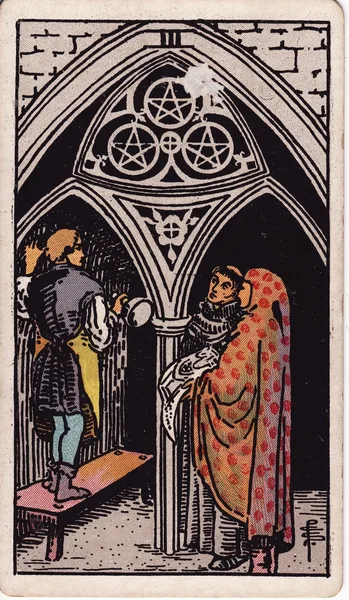
Three of Pentacles
Skill meets cooperation: a craftsman's work is seen, valued and built into something larger than himself.
- Element
- Earth
- Astrology
- Mars in Capricorn
- Number
- 3
- Yes or no
- Yes
Keywords: upright
- craftsmanship
- teamwork
- skill
- collaboration
- recognition
- quality work
Keywords: reversed
- mediocrity
- poor coordination
- carelessness
- conflict in the team
- unrecognized effort
- shoddy work
Three of Pentacles upright meaning
The Three of Pentacles is the card of skilled work done well and in company. Waite's sculptor in the monastery is a craftsman whose ability has earned a place in a larger project, and the card honors that step: your competence is seen, trusted and put to use. It speaks of collaboration in which each person brings a distinct expertise, of plans that become real because someone knows how to build them, and of quality that grows from patience rather than haste. Tradition also links it with renown and standing earned through a trade. Mars in Capricorn lends discipline and steady effort, so ambition is channelled into craft. Listen to those who read the plans differently; results improve when specialists meet and compare their views.
Three of Pentacles reversed meaning
Reversed, the Three of Pentacles points to work that is rushed, careless or badly coordinated. Waite names mediocrity, pettiness and weakness: standards slip, people pull in different directions, or someone refuses to listen to the rest of the team. Skill may be present but go unrecognized, or credit may be claimed without the effort behind it. Plans stall when roles are unclear or when everyone assumes someone else will check the details. The card asks where cooperation has broken down, and whether pride or indifference is lowering the quality of what you are building together.
In a reading
| Upright | Reversed | |
|---|---|---|
| Love | A relationship is built like a house: together, with shared plans and each person doing their part. Mutual respect for each other's strengths deepens the bond. | Partners work against each other or leave the practical side of the relationship unattended. Unspoken expectations about who contributes what create friction. |
| Career | Your professional skill is noticed, and a team project, apprenticeship or collaboration can move you forward. Quality and reliability earn real recognition. | Teamwork falters through poor communication, sloppy standards or ego. Your contribution may be overlooked until you speak up and clarify roles. |
| Money | Money grows through steady, skilled work and sensible shared investment in a project. Paying for quality pays off over time. | Cutting corners or poorly planned joint ventures drain resources. Review budgets and agreements before committing more. |
| Health | Energy is good when routine is built step by step with support, such as a coach, a class or a training partner. Steady habits matter more than intensity. | Energy scatters when habits are half-built or support is missing. Consistency and a clear plan will help you rebuild momentum. |
| Spirit | Spiritual growth comes through practice and community, learning a craft of the inner life alongside others. Devotion expressed in careful work is its own prayer. | Practice turns mechanical or becomes a matter of display. Returning to sincerity and humility restores its meaning. |
Advice
Upright. Bring your best skill to the shared project and listen to the other experts. Build patiently and let the quality of your work speak.
Reversed. Slow down, clarify who does what and raise your standards. Ask for honest feedback and offer it in return.
Symbolism
A young craftsman stands on a bench inside a stone church, working on a carved arch. Two figures look on with a plan in hand: a monk and a richly dressed patron, perhaps an architect. The pointed arch frames the scene and recalls the great cathedral builders. Three pentacles are set into the arch above, a sign of the worker's craft embedded in the structure. The card shows that mastery is not solitary: the maker, the planner and the sponsor each bring a necessary part, and the finished work belongs to all of them. Waite compares it with the apprentice of the Eight of Pentacles, who has now become a master.
Lay out cards on the table